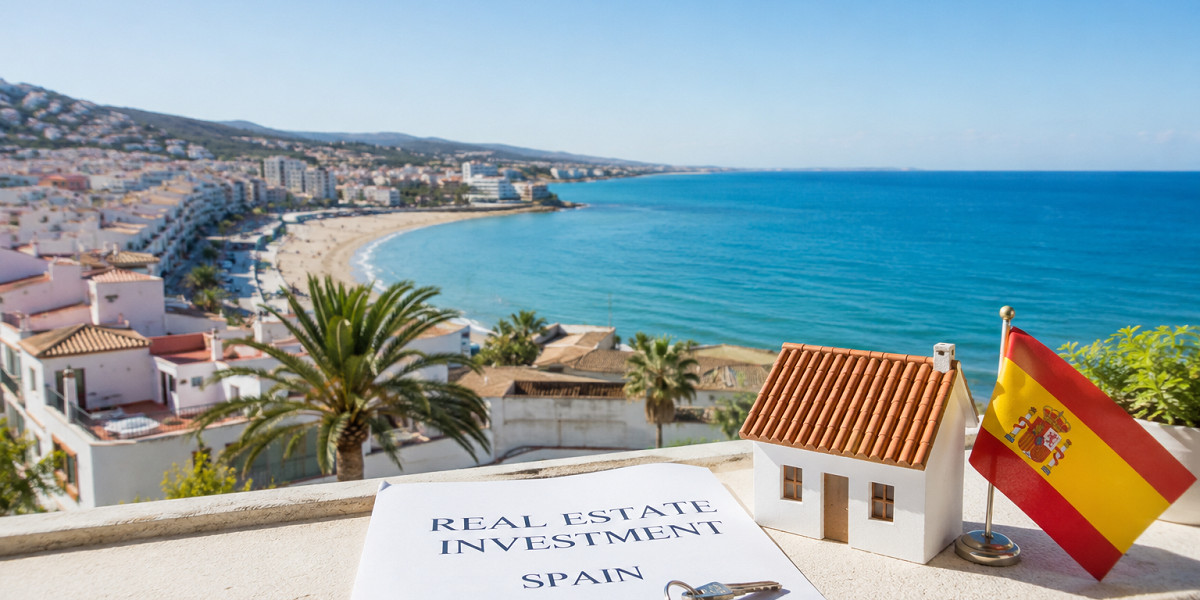
Real estate investment in Spain as a way to preserve capital and generate income
Spain remains one of the most attractive real estate markets in Europe for international buyers and investors. The country combines stable demand, developed infrastructure, a high quality of life, a mild climate, a strong tourism sector and a wide range of locations — from major cities to Mediterranean coastal areas.
Real estate investment in Spain should not be viewed as a single, universal product. An apartment in Barcelona, a flat in Madrid, a villa on the Costa Brava, a house in Mallorca, a property on the Costa del Sol or real estate in Valencia all have different investment logic, liquidity, costs and income potential.
For some buyers, property in Spain is a way to preserve capital in a European asset. For others, it is a source of rental income, a future relocation property, a family residence by the sea or a long-term investment in a market with limited supply.
General situation in the Spanish real estate market
The Spanish real estate market remains active. Demand is supported by local buyers, international clients, relocation, tourism, limited supply of quality properties and growing interest in living in Southern Europe.
The main feature of the market is its diversity. Spain consists of many local real estate markets, each of which requires separate analysis. Barcelona, Madrid, Valencia, Malaga, Marbella, Alicante, Mallorca, Ibiza, Costa Brava and Costa Dorada do not compete directly with one another. Each location has its own buyer profile, price level, seasonality and investment strategy.
An investor should assess not only the purchase price, but also the liquidity of the property, rental demand, legal status, taxes, maintenance costs, condition of the building, rental regulations and the prospects of the specific location.
In recent years, the Spanish market has been supported by limited supply, rising construction costs, strong demand in major cities and continued interest from foreign buyers. This makes strong locations resilient, but also increases the importance of entering the market at the right price.
Why investors choose real estate in Spain
Spain attracts investors not only because of its climate or lifestyle. The main reason is the combination of quality of life and stable real estate demand.
Key advantages of Spain include:
mild climate;
the Mediterranean Sea;
developed infrastructure;
international airports;
strong tourism sector;
quality healthcare;
good schools and universities;
safety;
European legal framework;
strong rental demand;
wide choice of locations and property types.
Spain is suitable both for conservative investors who want to preserve capital and for buyers looking for income through rental, renovation, resale or early-stage new development purchases.
However, real estate in Spain requires a precise approach. A property should not be bought only because it is near the sea or looks attractive. The investment result depends on location, entry price, legal clarity, technical condition and real market demand.
Main investment strategies
Real estate investment in Spain can follow different strategies. Before buying, it is important to define the goal, because the goal determines the city, area, property type and budget.
The main strategies include:
capital preservation;
long-term rental;
mid-term rental;
seasonal rental;
purchase for future personal use;
purchase, renovation and resale;
early-stage purchase in a new development;
investment in a premium asset;
purchase of commercial real estate;
capital diversification into a European asset.
For capital preservation, investors usually choose liquid locations with limited supply: Barcelona, Madrid, prestigious suburbs, strong coastal areas, Mallorca, Costa Brava and Costa del Sol.
For rental income, the focus should be on areas with stable demand: major cities, university areas, business districts, relocation hubs, tourist locations and places with good transport connections.
For resale, the key is value creation: apartments for renovation, undervalued areas, quality new developments, houses in growing suburbs and properties in locations where supply is limited.
Yield benchmarks
Property yields in Spain depend on the city, district, purchase price, condition of the asset, taxes, maintenance costs and rental model. Therefore, any figures should be treated as a benchmark, not as a guaranteed result.
In residential real estate, a conservative gross rental yield often falls within the range of 3.5–5% per year. In some areas and with a good purchase price, the figure may be higher. However, quality liquid properties in Barcelona, Madrid, the Balearic Islands or premium coastal areas usually provide more moderate yields. Their main value lies not only in rental income, but also in capital preservation, liquidity and potential long-term appreciation.
For investors, it is important not to chase the highest percentage. A property with a 4% yield in a strong location may be safer and more liquid than a property advertised at 7%, but with higher vacancy risk, a weak tenant or poor resale potential.
As a general guide:
3–4% per year — conservative, liquid properties in strong locations;
4–5% per year — a realistic working range for residential rental with the right purchase price;
5–6% per year — possible, but requires careful checking of the area, property condition and costs;
6–7.5% per year — more common in commercial real estate, street retail or higher-risk residential segments;
above 7.5% — always a reason to investigate why the yield is so high.
High yield is almost always connected with additional risk. This may include a less liquid location, a short rental contract, an unstable tenant, renovation needs, rental restrictions or strong dependence on seasonal demand.
Residential rental: 3.5–5% as a realistic benchmark
For residential real estate in Spain, a reasonable gross yield benchmark is around 3.5–5% per year. This applies to liquid apartments in major cities, desirable suburbs and strong coastal locations.
In Barcelona, Madrid, Valencia, Malaga and other active markets, the yield depends heavily on the entry price. The more expensive and prestigious the location, the lower the percentage yield usually is, but liquidity and stability of demand are higher. In more affordable areas, yields can be higher, but the investor takes on more risks: tenant quality, building condition, neighbourhood profile, vacancy periods and future resale.
It is important to distinguish between gross and net yield. Gross yield is calculated before taxes, community fees, insurance, repairs, management and vacancy periods. Net yield after all expenses can be noticeably lower.
For example, an apartment may show a gross yield of 4.5%, but after taxes, community expenses, management, repairs and vacancy, the real result may fall to 3–3.5%. This is why investment analysis should be based on a complete financial model, not only on the advertised rental price.
Barcelona as an investment market
Barcelona remains one of the most liquid real estate markets in Spain. It is an international city with limited supply, strong rental demand, a developed economy, universities, tourism and constant interest from foreign buyers.
For investors in Barcelona, the most important factors are:
district;
condition of the building;
floor level;
elevator;
layout;
legal status;
rental potential;
community expenses;
renovation potential;
liquidity of the asset.
The strongest areas in Barcelona for capital preservation and liquidity include Eixample, Sarria-Sant Gervasi, Pedralbes, Les Corts, Gracia, Poblenou, Diagonal Mar, the upper part of the city and selected historic neighbourhoods.
Barcelona does not always provide the highest percentage yield because the entry price is high. However, it remains one of the best markets for long-term liquidity, stable demand and capital preservation.
For an investor in Barcelona, buying the right property at the right price is more important than looking for the highest yield. A good apartment in a liquid district may offer moderate rental income, but preserve value and remain attractive for resale.
Madrid: capital city and business centre
Madrid is the largest business market in Spain. It attracts investors thanks to its economy, employment, domestic demand, international companies, universities and high population mobility.
Madrid is less dependent on seasonal tourism than coastal areas. Long-term rental demand is stronger here, supported by professionals, students, entrepreneurs and families.
For investors, Madrid is attractive because of its deep domestic demand base. In strong areas, quality properties remain liquid and rental demand is more stable throughout the year.
However, as in Barcelona, it is important to choose not only the city, but the specific district, street, building type and property. The difference between a good investment and an overpriced purchase can be significant.
In Madrid, investors can find different yield profiles: from conservative apartments in central and prestigious areas to higher-yield properties in developing districts. But a higher yield usually means higher operational or location risk.
Costa del Sol and Malaga
Costa del Sol is one of the best-known investment markets in Spain. Malaga, Marbella, Estepona, Benahavís, Fuengirola, Mijas and other locations attract buyers with climate, sea, golf, an international environment and an active rental market.
In recent years, Malaga has become not only a tourist destination, but also a technology and business hub. This has strengthened demand for both living and rental properties.
Marbella and Benahavís remain strong premium markets. Buyers look for villas, apartments in gated communities, sea-view properties, golf real estate and modern residences.
Costa del Sol can be interesting for rental income and capital growth, but investors should consider seasonality, maintenance costs, competition, the quality of the complex and local rental regulations.
In tourist locations, yields can look higher on paper, especially with seasonal rental. But investors must calculate the full year: vacancy periods, management, cleaning, repairs, taxes, platform commissions and legal restrictions.
Valencia and Alicante
Valencia has become one of the most notable real estate markets in Spain for buyers seeking a balance between price, quality of life and growth potential. The city offers the sea, infrastructure, universities, an international community and more accessible prices compared with Barcelona and Madrid.
Valencia is interesting for long-term rental, relocation, lifestyle purchases and investment in areas with improving infrastructure.
Alicante and Costa Blanca attract foreign buyers with a more accessible budget, the sea, climate and a wide choice of apartments and houses. This market is especially popular among European buyers, retirees, families and clients looking for holiday properties.
For investors, it is important to distinguish between properties for personal use and properties with real liquidity. Not every apartment by the sea will be easy to rent out or resell.
In more affordable cities in Spain, gross yields can be higher than in premium districts of Barcelona or Madrid. But investors must pay closer attention to demand quality, tenant solvency, building condition and future resale prospects.
Catalonia and the coast near Barcelona
Catalonia remains one of Spain’s key real estate markets. It includes Barcelona, prestigious suburbs, Costa Maresme, Sitges, Castelldefels, Gava Mar, Costa Brava, Girona and Tarragona.
For investors, Catalonia is attractive because of Barcelona’s international status, strong economy, rental demand and limited supply in the best locations.
Sitges, Castelldefels and Gava Mar are suitable for buyers looking for life by the sea with quick access to Barcelona. Costa Maresme is attractive for family houses and villas. Costa Brava remains a prestigious destination for holiday homes, premium properties and long-term capital preservation.
In Catalonia, it is especially important to check rental rules, technical condition, legal status of the land, renovation possibilities and the real liquidity of the specific town or district.
For a rental strategy, investors should understand in advance whether the property will be used for long-term, mid-term or seasonal rental. These models generate different income, require different management and have different legal restrictions.
Balearic Islands
Mallorca, Ibiza and the other Balearic Islands occupy a special place in the Spanish investment market. This is a limited island market with high international demand and a shortage of quality supply.
Mallorca attracts buyers with villas, fincas, seaside apartments, historic properties and a high quality of life. Ibiza is a more niche and premium market, with higher entry prices and limited supply.
Investment on the islands is often linked not only to yield, but also to capital preservation, lifestyle and the rarity of the asset.
The main risks are high purchase prices, complex construction and renovation rules, rental restrictions, seasonality and the need for deep legal due diligence.
In premium island locations, yields may be lower than in less expensive mainland cities. But these properties are often bought not for maximum percentage return, but for rarity, status, personal use and long-term capital preservation.
New developments as an investment
New developments in Spain remain in demand, especially in locations with a shortage of modern housing. Buyers value energy efficiency, terraces, parking, swimming pools, security, communal areas, modern layouts and lower renovation costs after purchase.
Buying in a new development can be interesting at an early stage if the project is located in a strong area, the developer is reliable, the entry price is reasonable and the payment terms are transparent.
Before buying a new build, it is important to check:
developer reputation;
building permit;
bank guarantees;
completion dates;
payment terms;
property specifications;
quality of materials;
community expenses;
liquidity of the location;
potential rental or resale demand.
A new build is not always the best investment. If the property is in a weak location or sold at an inflated price, growth potential may be limited.
New-build yields often appear moderate because the purchase price is higher than in the resale market. But a quality new development offers other advantages: lower repair costs, modern energy efficiency, convenient layouts, parking, terraces and stronger demand from tenants.
Resale market and renovation properties
The resale market remains the core of Spanish real estate. Most apartments in historic centres, seaside houses, villas, city flats and character properties belong to this segment.
The advantage of the resale market is the possibility of buying in an already established location. The disadvantage is the need for more detailed due diligence.
Properties for renovation can be interesting if the purchase price allows value to be created. This is especially relevant in Barcelona, Madrid, Valencia, Malaga and historic cities.
However, renovation in Spain requires experience. Investors need to consider licences, building condition, community restrictions, work timelines, material costs, contractor availability and possible surprises in older buildings.
A good renovation property can increase in value. A poor one can become an expensive and slow project without clear profitability.
Investors should calculate not only the purchase price, but the full project budget. If an apartment is cheaper than the market but requires major renovation, replacement of utilities, licences and long works, the final yield may be lower than expected.
Rental income
Rental income is one of the main reasons to invest in Spanish real estate. But yield depends not only on the rent, but on the entire financial model.
Investors should take into account:
purchase price;
purchase taxes;
notary and registration costs;
renovation and furnishing;
mortgage, if used;
tax on rental income;
utilities;
community fees;
insurance;
property management;
vacancy periods;
repairs between tenants;
legal restrictions.
Long-term rental provides more stable income and less operational burden. Mid-term rental can be interesting in cities with relocation, students, international professionals and temporary projects. Tourist rental can generate strong seasonal income, but requires licences, management and careful checking of local rules.
A common mistake is to calculate yield only from the rental price. Real profitability appears only after all expenses, taxes and vacancy risks are included.
For example, if a property is bought for €500,000 and rented for €2,000 per month, the gross annual income is €24,000, or 4.8% before expenses. After taxes, community fees, insurance, management, repairs and possible vacancy, the net yield will be lower.
Tourist rental
Tourist rental in Spain remains attractive, but it is one of the most regulated segments of the market. Different regions and cities apply different rules, licences and restrictions.
Before buying a property for tourist rental, investors should check:
whether tourist rental is allowed in the location;
whether a licence can be obtained;
whether the building has restrictions;
whether the owners’ community prohibits it;
which taxes apply;
which requirements the property must meet;
the real seasonality of demand;
management costs.
Buying a property with the expectation of tourist rental without checking the licence is risky. A property can be beautiful and well located, but legally unsuitable for the chosen strategy.
Tourist rental can show high income during the season, but investors should calculate the full year. It is important to include winter months, competition, cleaning costs, platform fees, maintenance, management and possible regulatory changes.
Commercial real estate and street retail
Commercial real estate can provide higher yields than residential property, but it also carries more risk. This is especially true for street retail — ground-floor units used by shops, cafés, salons, services and other businesses.
In street retail, investors often see yield benchmarks of around 5–7.5% per year, and in some cases higher. But higher yield usually means higher risk: dependence on the tenant, the condition of the business, contract length, rent indexation, location, footfall, competition, fit-out costs and vacancy risk.
Prime retail streets in Madrid and Barcelona may provide lower yields, but they are considered more stable. In less central locations, yields can be higher, but vacancy and tenant replacement risks are also higher.
The main danger in street retail is buying a property only because the advertised yield looks attractive. If the tenant is weak, the contract is short, the business is unstable or the location depends on a narrow customer flow, the investment may be much riskier than it appears.
Before buying a commercial unit, it is important to check:
duration and terms of the lease;
tenant payment history;
type of business;
termination rights;
rent indexation;
owner expenses;
condition of the unit;
licences;
street footfall;
liquidity on resale;
potential for re-letting.
Commercial real estate is not suitable for every investor. It can be interesting for those who are ready to analyse not only the property, but also the tenant’s business, the lease, footfall and location stability.
If residential property in Spain is often perceived as a more understandable and conservative asset, street retail requires a more professional approach. The investor must assess not only the walls, but also the economy of the business paying the rent.
Foreign investors
Foreign buyers play an important role in the Spanish real estate market. Their interest is especially visible in Barcelona, Madrid, Valencia, Alicante, Malaga, Marbella, the Balearic Islands and coastal regions.
Foreign investors choose Spain because of climate, quality of life, safety, European jurisdiction, international schools, healthcare, transport and the possibility of using the property both personally and for rental.
Before buying, a foreign buyer should prepare documents, obtain a NIE, open a bank account, confirm the origin of funds, understand tax consequences and organise legal support for the transaction.
It is also important to decide in advance who will own the property: an individual, spouses, a company or another structure. This affects taxes, inheritance, asset management and future resale.
Foreign investors should also consider currency risk, tax residency, income declaration rules and management costs if they do not live in Spain permanently.
Taxes and purchase costs
Real estate investment in Spain should always be calculated with additional costs in mind. The property price is only part of the budget.
Possible purchase costs include:
property transfer tax for resale properties;
VAT and stamp duty for new builds;
notary fees;
land registry fees;
lawyer fees;
mortgage costs, if financing is used;
property valuation;
bank commissions;
translation costs;
renovation and furnishing.
After purchase, the owner pays annual taxes, utilities, community fees, insurance, maintenance and rental income tax if the property is rented out.
An accurate cost calculation before signing is an essential part of investment analysis.
For example, a property with a gross yield of 5% may look attractive, but after all expenses the net result may be significantly lower. This is why it is useful to calculate several scenarios: optimistic, base and conservative.
Main investment risks
The main risk is buying an overpriced property. In strong markets, sellers often include expected future growth in the price, but not every property is worth the asking price.
The second risk is choosing the wrong location. Even in a popular city, districts differ in liquidity, quality of demand and future prospects.
The third risk is legal restrictions. These may concern rental, licences, land status, illegal extensions, debts, easements, tenants or renovation limitations.
The fourth risk is the technical condition of the property. Older buildings, villas, masías, seaside houses and partially renovated properties require especially careful inspection.
The fifth risk is an incorrect financial model. If the investor does not include taxes, expenses, vacancy, repairs and management, the real yield may be lower than expected.
The sixth risk is buying only because of a high advertised yield. If the yield is above the market, the reason must be understood. Sometimes it is a real opportunity. But often it signals higher risk: weak location, unstable tenant, legal limitations or poor resale prospects.
How to choose an investment property
A good investment property in Spain should match not only the buyer’s taste, but also market logic.
Before buying, it is important to answer several questions:
Who will be the future tenant or buyer?
Why will this property be in demand?
Can it be sold easily in several years?
Is the price in line with the market?
Are there legal restrictions?
What are the post-purchase costs?
What is the real yield?
Does it require renovation?
Can financing be obtained?
Does it match the chosen strategy?
Investment property is not always the most beautiful property. Often, the best investment is a liquid apartment with a good layout, a solid house in a desirable area or a property with clear improvement potential.
If the goal is capital preservation, it is better to choose strong locations, quality buildings and properties with stable demand. If the goal is income, rental demand, expenses, taxes, vacancy and management must be analysed more deeply. If the goal is commercial income, the tenant, lease and business stability must be checked.
How to read investment offers
In the Spanish real estate market, investors may see offers with different yield figures. Some properties promise 4%, others 6%, and some 8% or more. But comparing them only by percentage is incorrect.
It is important to understand what is included in the calculation:
gross or net yield;
taxes;
community fees;
vacancy assumptions;
management costs;
renovation needs;
tenant stability;
lease extension potential;
usage restrictions;
liquidity on resale.
Special caution is needed with phrases such as “guaranteed yield”, “passive income without risk”, “tenant already in place” or “above-market return”. In Spain, as in any developed market, high yield is almost always connected with additional risk.
An investor should look at the full picture: yield, liquidity, legal clarity, tenant quality, costs and district prospects.
Outlook for real estate investment in Spain
In the coming years, interest in Spanish real estate is likely to remain high. Demand is supported by climate, quality of life, international appeal, limited supply in strong locations and the desire of buyers to diversify capital into European assets.
The most resilient markets will remain those with real demand for living and rental: Barcelona, Madrid, Valencia, Malaga, Marbella, strong coastal areas, the Balearic Islands and prestigious suburbs of major cities.
At the same time, buyers are becoming more selective. They compare properties, analyse expenses, check documents, assess energy efficiency and are less willing to overpay for weak offers.
Spain remains an attractive destination for investment, but a successful purchase requires professional analysis. It is important to choose not just a country or city, but a specific property with a clear strategy, real liquidity and a verified legal basis.
Conclusion
Real estate investment in Spain can be an effective way to preserve capital, generate rental income and create a long-term European asset. The country offers a wide range of properties: apartments in Barcelona and Madrid, seaside homes, coastal villas, new developments, renovation projects, commercial real estate and premium residences.
In residential real estate, a realistic gross yield benchmark is often around 3.5–5% per year. In commercial real estate and street retail, investors may see 5–7.5%, but this level of return requires deeper analysis of the tenant, lease, footfall, location and vacancy risk.
The diversity of the market is what makes it complex. One property may be good for personal use, another for rental, another for capital preservation and another for resale after renovation. A mistake in location, price or legal due diligence can reduce profitability and make future resale more difficult.
GG Real Estate Barcelona helps buyers and investors analyse the Spanish real estate market, choose locations, compare properties, check documents, calculate costs and complete transactions safely. In a market where quality supply is limited, professional support is especially important.