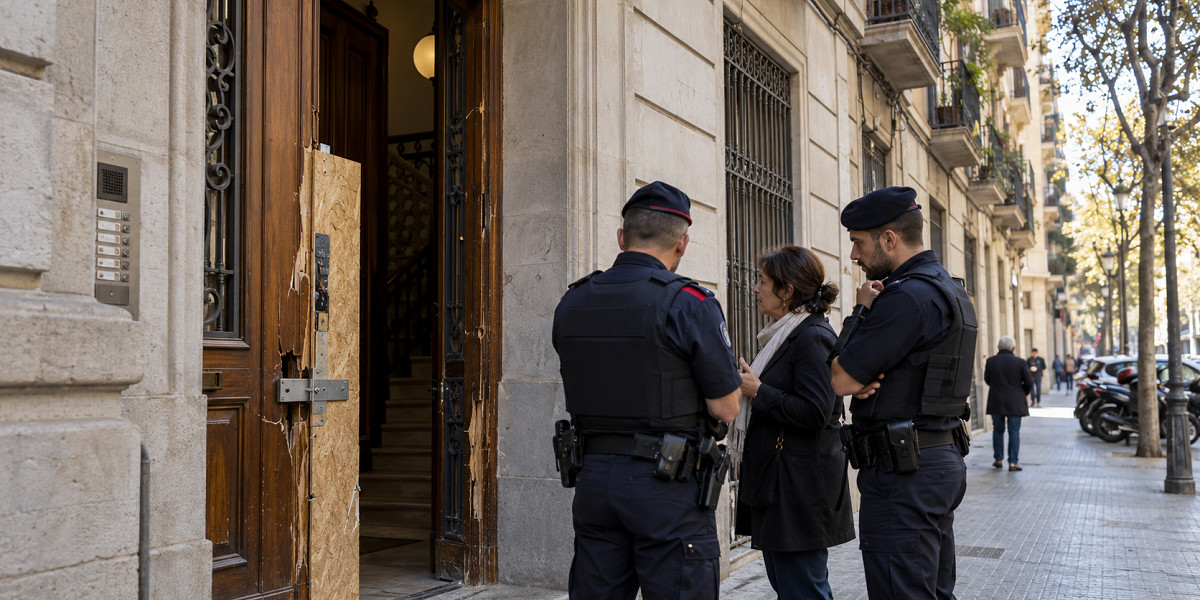
Squatters in Spain remain one of the most discussed issues in the real estate market, especially in Catalonia. However, the situation is gradually changing: the number of reported cases of illegal occupation has fallen, property owners have more legal tools available to protect their rights, and on 2 October 2026 Congress rejected a new decree that would have extended additional protection against eviction for certain vulnerable occupants until 2030. We look at whether the risk for property owners has genuinely decreased.
The issue of squatters became particularly visible after the financial and construction crisis of 2008. Spain was left with a large stock of vacant properties, unsold new developments, bank-owned assets and distressed mortgage portfolios.
It was during this period that illegal occupation developed from a relatively local social issue into one of the most widely discussed risks associated with Spanish real estate.
Today, the situation is different.
Spain is experiencing a shortage of housing in many of its most sought-after cities and coastal areas, while the legal framework has gradually introduced stronger mechanisms to protect property rights.
At the same time, it is important to distinguish between official data and widespread myths.
How many cases of illegal occupation are there in Spain?
The latest complete figures show that the problem has not disappeared, but the number of reported cases has declined.
According to Spain’s Ministry of the Interior, 14,875 cases of allanamiento de morada and usurpación de inmuebles were recorded in 2025, compared with 16,426 in 2024.
This represents a year-on-year decline of approximately 9.4%.
Catalonia, however, remains the region with the highest number of recorded cases. For this reason, the issue remains particularly relevant for property buyers and owners in Barcelona.
Nevertheless, the official figures do not support the widespread perception that illegal occupation is increasing uncontrollably across Spain.
Who are “squatters” under Spanish law?
The word squatters is commonly used to describe people who occupy someone else’s property without permission.
Spanish law, however, distinguishes between several very different situations.
If someone unlawfully enters or remains in a property that constitutes another person’s home, the offence may be classified as allanamiento de morada.
If an empty property that is not being used as someone’s home is occupied without permission, the offence is generally treated as usurpación de inmueble.
This distinction is important because the legal procedures and possible penalties are different.
Illegal entry into someone’s home has long been a criminal offence
The idea that Spain only recently introduced criminal penalties for squatters is incorrect.
Criminal liability already existed.
Article 202 of the Spanish Criminal Code provides for six months to two years in prison for unlawfully entering or remaining in another person’s home against the resident’s wishes.
If violence or intimidation is used, the penalty may increase to one to four years in prison, together with a fine.
The illegal occupation of property that does not constitute someone’s home is governed by Article 245 of the Criminal Code.
Non-violent usurpación may result in a fine, while occupation involving violence or intimidation can lead to more serious criminal penalties.
The key change in recent years, therefore, has not been the creation of criminal liability but efforts to speed up the return of property to its lawful owner.
What did the new anti-squatting law change?
One of the most significant legal changes in recent years was Organic Law 1/2025, which came into force in 2025.
The reform included offences of allanamiento de morada and usurpación among the types of cases that, where the legal requirements are met, may be processed under Spain’s accelerated criminal procedure known as juicio rápido.
This means that certain cases involving illegal occupation can potentially move through the courts faster than before.
However, it would be incorrect to say that every squatter can now automatically be removed within 24 or 48 hours.
Each case depends on its particular circumstances, including the status of the property, the type of entry, the available evidence and the legal classification of the offence.
The myth of the “48-hour rule”
One of the most persistent myths is that if squatters remain inside a property for more than 48 hours, the police can no longer intervene.
There is no universal 48-hour rule in Spanish law.
What matters is not simply the amount of time that has passed, but the circumstances of the case and whether the property is someone’s home or an otherwise vacant property.
For this reason, owners should report an illegal entry as quickly as possible and provide documents proving ownership and the property’s actual use.
What changed on 2 October 2026?
The latest major development came on 2 October 2026.
Spain’s Congress of Deputies rejected Royal Decree-Law 26/2026, which had introduced a new system of protection for certain vulnerable occupants facing eviction.
The decree would have allowed some eviction proceedings to be suspended until 31 December 2030, provided that the occupant met the legal criteria for social vulnerability, had no alternative housing and satisfied the other conditions established by law.
However, Congress refused to ratify the decree on 2 October, meaning the new protection regime did not remain in force.
For property owners, this is significant because one potential source of additional delay in certain eviction proceedings was removed.
Does this mean squatters now have less chance of staying in a property?
To a certain extent, yes, although the situation should not be oversimplified.
Several developments currently work in favour of property owners.
First, the latest statistics show a reduction in reported cases of illegal occupation.
Second, the 2025 procedural reform created the possibility of faster handling for certain criminal cases.
Third, the new system that would have extended additional protection for certain vulnerable occupants until 2030 was rejected by Congress on 2 October 2026.
Existing social and procedural protections have not disappeared completely, so it would be inaccurate to say that the problem of squatters has been fully resolved.
Why does Catalonia remain a special case?
For Barcelona and Catalonia, the issue of squatters remains more significant than in many other regions of Spain.
Historically, Catalonia has accounted for a substantial share of recorded cases of illegal occupation.
This is linked to a combination of factors, including the size of the urban housing stock, high property prices, the presence of bank-owned and professionally owned assets, and particular characteristics of the regional property market.
For buyers in Barcelona, it is therefore especially important to verify not only the legal ownership of a property but also its actual possession status.
Why are properties with squatters still being sold?
Spanish property portals continue to feature listings using terms such as sin posesión, inmueble ocupado or similar warnings.
These properties are often offered at significant discounts.
However, the lower price reflects additional risk.
A buyer may acquire legal ownership of the property without automatically obtaining immediate physical possession or the ability to use or rent it.
Many such assets come from bank portfolios, investment funds or other professional owners.
For this reason, they should not be compared directly with standard resale properties.
How is the situation different from the period after the 2008 crisis?
After the 2008 financial crisis, Spain was left with a very large number of vacant properties.
The construction boom came to an abrupt end, sales collapsed, thousands of new homes remained unsold and large volumes of property moved onto the balance sheets of banks and financial institutions.
Today, the structure of the market is very different.
In Barcelona, Madrid, the Costa Blanca, the Costa del Sol and other high-demand areas, one of the main challenges is now a shortage of supply.
At the same time, additional civil and criminal procedures have been created to strengthen the protection of lawful owners.
For this reason, today’s market cannot be directly compared with the situation that followed the 2008 crisis.
What should property buyers check?
For most ordinary buyers, the risk of dealing with squatters can be reduced significantly before the purchase takes place.
Particular care should be taken with bank-owned properties, investment fund assets, distressed properties, heavily discounted listings and any property explicitly marketed as being sold without possession.
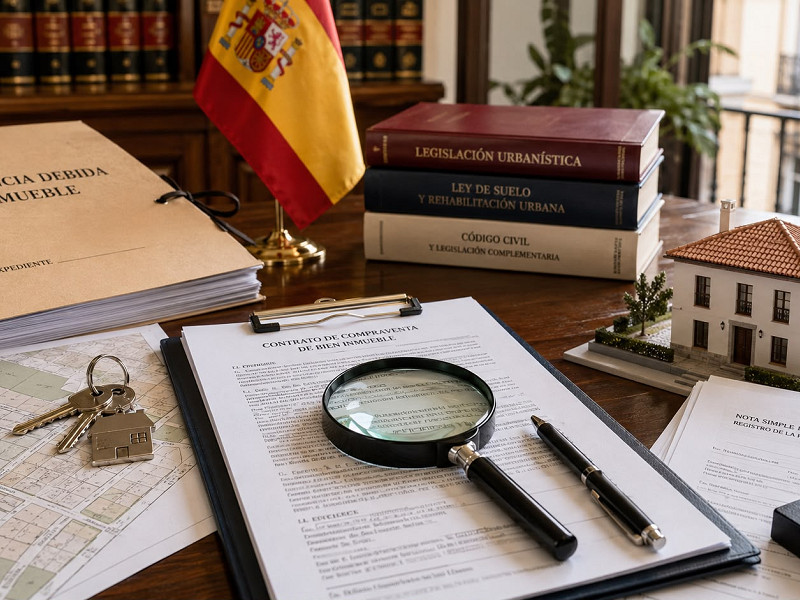
When purchasing a standard resale property, house or new-build home, buyers should verify the legal status of the property, the presence of tenants or other occupants, the seller’s documentation and the physical possession of the property before signing the transaction.
A low price should therefore never be the only factor in choosing a property.
What does this mean for property owners?
For property owners, the legal trend over recent years has become clearer.
Illegal entry and unlawful occupation remain punishable offences.
Certain cases can now be processed under accelerated procedures.
The number of reported incidents fell in 2025.
And on 2 October 2026, Congress rejected a new framework that would have allowed additional suspension of certain eviction proceedings until 2030.
None of this means that squatters will disappear from Spain.
But the legal environment is gradually becoming less favourable to prolonged illegal occupation and is giving owners more effective tools to protect their property rights.
Squatters in Spain: what is really happening?
The problem of squatters in Spain is real and deserves particular attention in Catalonia.
However, the current situation is very different from the image often presented on social media and in sensational headlines.
Squatters have not acquired any new general right to someone else’s property, and criminal liability for illegal entry and illegal occupation existed long before the latest reforms.
The most important changes concern procedure: Spain has been gradually introducing faster court mechanisms, clarifying the return of property to lawful owners and limiting some of the situations in which eviction proceedings can be delayed.
The latest statistics also show a decline in the number of reported cases.
It is therefore more accurate to speak of a gradual reduction in risk for responsible property owners and stronger legal mechanisms for protecting real estate, rather than the complete disappearance of the problem.
For buyers, the conclusion is straightforward: a property should be checked thoroughly before purchase, rather than trying to resolve problems after the transaction.
GG Real Estate Group monitors changes in Spanish property law and the real estate market so that owners, buyers and investors can make decisions based on current legislation and reliable market information.