Transaction Process, Taxes, Guarantees and Developer Checks
Buying a new-build property in Spain allows buyers to choose a modern apartment, house or villa with new engineering systems, improved energy efficiency, communal facilities and statutory construction guarantees. At an early stage of development, buyers often have a wider choice of layouts, floors, views and finishes.
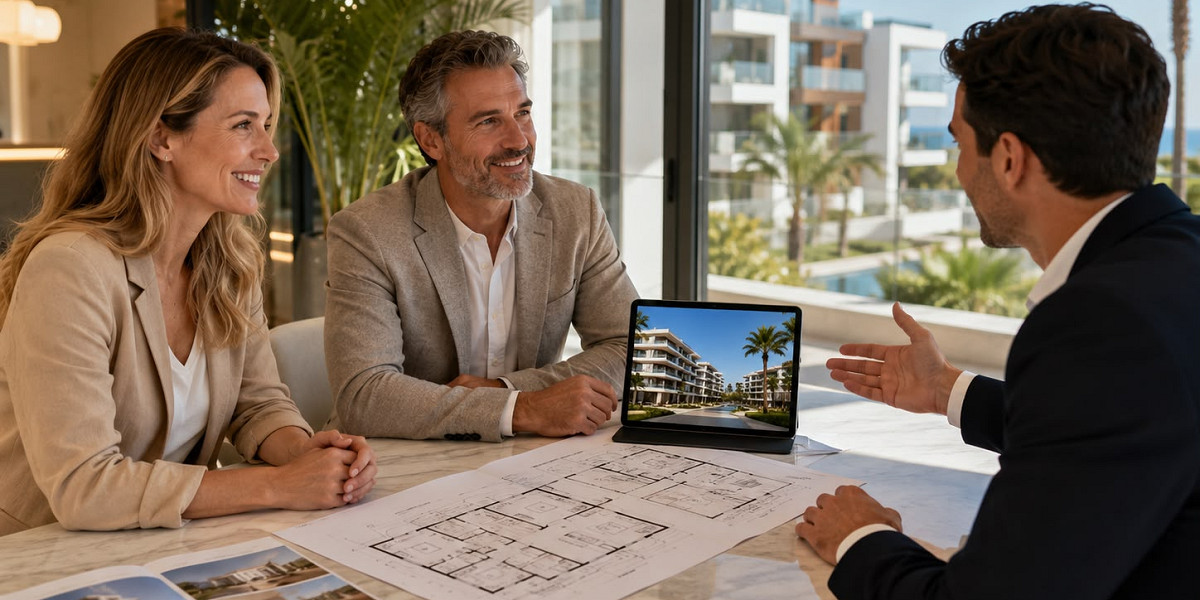
However, purchasing a property under construction differs from buying a completed resale property. The buyer signs a contract with the developer, makes staged payments and may have to make a decision based primarily on plans, technical documentation and computer-generated images.
Before signing any contract, it is therefore essential to check the developer, the ownership and legal status of the land, the building licence, the delivery conditions and the guarantees protecting advance payments.
What Is Considered a New-Build Property in Spain?
A new-build property generally refers to real estate purchased directly from a developer and transferred to its first owner after completion.
It may include:
- an apartment in a development under construction;
- a completed apartment that has not previously been transferred to another owner;
- a townhouse;
- a newly built detached house or villa;
- a property within a gated residential complex;
- a unit purchased during the early stages of a development.
The main difference from a resale property is not only the age of the building but also the status of the seller and the nature of the first transfer. These factors determine the contractual structure, taxes and payment process.
Advantages of Buying a New-Build Property
New homes are generally constructed in accordance with current technical standards and energy-efficiency requirements. Buyers benefit from new utility systems, modern insulation, improved soundproofing, contemporary lifts, climate-control systems and lower initial renovation costs.
Modern residential developments may include:
- a swimming pool;
- landscaped gardens and relaxation areas;
- a gym;
- a children’s playground;
- security;
- underground parking;
- storage rooms;
- electric vehicle charging points.
When purchasing at an early stage, buyers may be able to select the floor, orientation, views, number of bedrooms and certain finishing materials. However, every agreed feature should be recorded in the contract and technical specifications.
Main Risks of Buying a New-Build Property
The principal risks arise when the property has not yet been completed or authorised for occupation.
Possible issues include:
- construction delays;
- changes to certain project characteristics;
- differences between the completed property and promotional materials;
- delays in obtaining the occupancy authorisation;
- finishing defects;
- financial difficulties affecting the developer;
- inadequate protection of advance payments;
- additional expenses not identified at the reservation stage.
Promotional images and verbal promises made by a sales representative do not replace the contract. The legally relevant documents are the signed agreement, plans, technical specifications and contractual appendices.
Checking the Developer and the Project
Before paying a substantial amount, the legal and financial position of the developer should be examined.
The buyer should confirm:
- whether the company is properly registered and who is authorised to represent it;
- whether the developer owns the land;
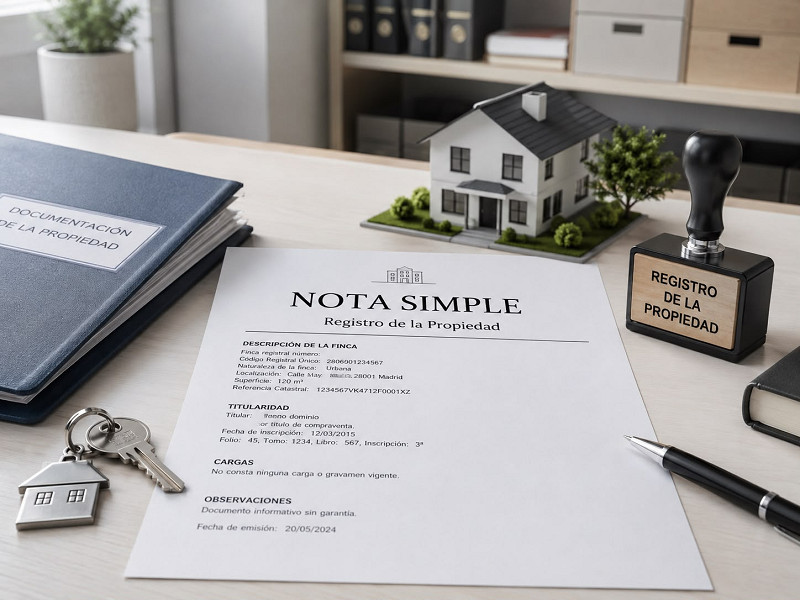
- whether the land is subject to a mortgage or other encumbrances;
- whether the building licence has been granted;
- whether the development complies with planning regulations;
- which construction and delivery dates are stated in the documents;
- who is financing the development;
- whether advance payments are properly guaranteed.
The project documentation, apartment plans, communal areas, parking space, storage room and technical description of the materials should also be reviewed.
The surface area shown in marketing materials may be calculated in different ways: usable area, constructed area, total area or constructed area including a proportional share of communal spaces. Buyers should understand precisely which measurement is included in the price.
Reserving a New-Build Property
At the first stage, the buyer usually signs a reservation agreement and pays a relatively small amount. The selected unit is then temporarily removed from the market.
The reservation agreement should specify:
- the exact identification of the property;
- the purchase price;
- whether parking and storage are included;
- the reservation amount;
- the deadline for signing the main contract;
- the conditions for refunding the payment;
- the estimated completion date;
- whether the transaction is subject to legal due diligence or mortgage approval.
A reservation payment should not be made without written refund conditions. If the building licence or other essential documents have not yet been obtained, this should be expressly stated in the agreement.
The Contract with the Developer
After reservation, the parties sign a private purchase contract. It establishes the price, payment schedule, construction deadline, property characteristics and responsibilities of both parties.
The following documents should be attached:
- the floor plan;
- the technical specifications;
- the description of finishing materials;
- plans of the parking space and storage room;
- a description of the communal areas;
- the payment schedule;
- the estimated delivery date;
- the conditions under which the development may be modified;
- the procedure for notifying the buyer of completion;
- the consequences of delayed completion.
Particular attention should be paid to clauses allowing the developer to change the area, materials, layout or delivery dates unilaterally.
Every promised feature, including the views, terrace, swimming pool, kitchen equipment, air-conditioning system and quality of finishes, should be documented in writing.
Payment Schedule
The payment structure depends on the development and the stage of construction.
It normally includes:
- a reservation payment;
- an initial payment when the private contract is signed;
- staged payments during construction;
- final payment when the public deed is signed.
Payments may be linked to specific construction milestones or fixed calendar dates.
Before making each transfer, the buyer should confirm that the funds are being sent to the official account identified in the contract and that the payment reference is correct. Receipts and bank confirmations should be retained until the transaction has been completed.
Guarantees for Advance Payments
Funds paid to the developer during construction must be protected in the circumstances established by Spanish law.
A developer receiving advance payments after the building licence has been granted must guarantee their return, together with the applicable interest, through a bank guarantee or insurance policy. The payments must be deposited into a special account used for construction-related expenses.
The contract should identify the bank or insurance company providing the guarantee and the account into which payments must be made. The buyer should receive documentation confirming the individual protection of the amounts paid.
If construction does not begin, is not completed within the agreed period or the property cannot legally be delivered for occupation, the buyer may, subject to the relevant legal procedure, terminate the contract and seek repayment of the protected amounts or agree to a revised delivery date.
General information about the financing of the development does not replace an individual guarantee issued in favour of the buyer.
Taxes When Buying a New-Build Property
The first transfer of a new residential property directly from a developer is generally subject to Spanish VAT, known as IVA, at a rate of 10%.
Stamp duty, known as AJD, is also payable. The applicable rate is determined by the autonomous community in which the property is located.
Commercial property, land and certain other types of real estate may be subject to a different tax treatment, including IVA at 21%.
In addition to taxes, the buyer should allow for:
- notary fees;
- Land Registry fees;
- legal representation;
- bank charges;
- a property valuation when financing is required;
- powers of attorney and translations;
- utility connection or transfer costs.
The full acquisition budget should be calculated before the main contract with the developer is signed.
Mortgage Financing for a New-Build Property
A new-build property can be purchased with mortgage financing. However, final approval is usually dependent on completion of the development, the bank valuation and the buyer’s financial circumstances at the time of delivery.
When construction takes a long time, several months or even years may pass between reservation and final completion. During that period, the buyer’s income, bank lending requirements and interest rates may change.
Preliminary mortgage approval does not therefore guarantee that the loan will be granted when construction has been completed.
When the buyer cannot complete without financing, a mortgage condition should be negotiated and included in the contract. Otherwise, refusal by the bank may result in the loss of payments already made.
Completion of Construction and Required Documents
Before the final notarial transaction, it must be confirmed that construction has been completed and that the property can legally be used for residential purposes.
Depending on the region and municipality, the following should be checked:
- the final works certificate;
- the declaration of the completed new building;
- the energy performance certificate;
- the first occupancy licence or equivalent authorisation;
- documentation relating to utility systems;
- registration of the property;
- the absence of new encumbrances;
- the ability to connect utilities.
The protection of advance payments generally ends once the document authorising residential use has been obtained and the property has been delivered to the buyer in the legally required manner.
The buyer should not sign the final deed or pay the outstanding balance without confirming that the essential documentation is in place.
Inspecting the Property
A technical inspection should be carried out before signing the final deed or immediately before the keys are handed over.
The inspection should cover:
- walls, ceilings and floors;
- windows and doors;
- plumbing;
- electrical sockets and lighting;
- air conditioning and heating;
- kitchen equipment;
- the terrace and drainage;
- the parking space;
- the storage room;
- compliance with the agreed layout;
- the quality of finishing materials.
All defects should be recorded in writing, preferably with photographs. A snagging list should be submitted to the developer with a request for the defects to be corrected within an agreed period.
Signing the handover documentation without reservations may make it more difficult to prove visible defects that existed when the property was delivered.
Guarantees for Construction Defects
Spanish law establishes different periods of liability depending on the type and seriousness of the construction defect.
A distinction is generally made between finishing defects, defects affecting the building’s habitability and serious structural damage.
To protect their rights, buyers should notify the developer promptly, retain photographs, technical reports and written correspondence. For serious problems, an architect or other qualified technical professional should be instructed.
Construction defect guarantees should not be confused with guarantees protecting advance payments. These are separate forms of buyer protection.
Notarial Completion and Registration
Once construction has been completed and the documentation checked, the buyer and developer sign the public deed of sale before a notary.
Before signing, the buyer should verify:
- the final price;
- all payments already made;
- the area and description of the property;
- the parking space and storage room;
- the necessary permits and authorisations;
- the Land Registry status;
- the procedure for handing over the keys;
- utility connections;
- the list of identified defects.
After completion, the relevant taxes are paid and ownership is registered in the buyer’s name.
The electricity, water, gas, internet and insurance contracts should then be arranged, together with payments to the community of owners.
Is a New-Build Property Suitable for Investment?
A new-build property may appeal to investors because of its modern quality, energy efficiency and demand among tenants and future buyers.
However, investment potential should not be assessed solely on the promotional price. Buyers should consider:
- the price of comparable completed properties;
- the future prospects of the area;
- the volume of new supply expected;
- maintenance and community fees;
- rental restrictions;
- the expected date on which income can begin;
- the liquidity of the specific layout;
- taxes payable on acquisition and future sale.
Buying during the early stages may provide a more attractive price, but it also increases the waiting period and exposure to construction-related risks.
Common Mistakes Made by Buyers
The most common mistakes when buying a new-build property include:
- choosing a property based only on computer-generated images;
- failing to carry out an independent review of the developer;
- transferring money without an individual guarantee;
- failing to examine the technical specifications carefully;
- misunderstanding how the property area is calculated;
- accepting an unclear delivery date;
- underestimating taxes and additional costs;
- relying on mortgage financing without a contractual condition;
- signing the public deed without a technical inspection;
- failing to record defects in writing.
Buyers should remember that the sales office represents the developer. Independent legal and technical advice is recommended to protect the buyer’s interests.
Conclusion
Buying a new-build property in Spain involves selecting a development, checking the developer and the land, reviewing the building licence, signing the contract, monitoring bank guarantees, making staged payments, inspecting the completed property and registering ownership.
The key condition for a safe transaction is not to transfer substantial amounts before the documentation has been checked and proper protection of advance payments has been confirmed.
GG Real Estate Barcelona represents the buyer’s interests and assists with the purchase of new-build properties in Barcelona, Catalonia, the Costa Brava, the Costa Blanca, the Costa del Sol, Madrid, the Balearic Islands and other regions of Spain. We help buyers select a development, check the developer and documentation, negotiate the contract, monitor payments, organise the inspection and register ownership.
Frequently Asked Questions
What taxes are payable when buying a new-build property in Spain?
When a new residential property is purchased directly from a developer, the buyer generally pays IVA at 10% and the regional AJD tax.
Must the developer guarantee advance payments?
In the circumstances established by law, advance payments must be protected by a bank guarantee or insurance policy and deposited into a special account.
Can a new-build property be purchased with a mortgage?
Yes. However, final mortgage approval usually takes place closer to completion and depends on the bank valuation and the buyer’s financial circumstances.
What happens if the property is delivered late?
The buyer should review the contract, the reason for the delay and the available guarantees. Depending on the circumstances, the buyer may agree to a revised deadline or seek termination and repayment of protected amounts.
Is a technical inspection necessary for a new property?
Yes. Before final handover, the finishes, equipment, utilities and compliance with the contract should be checked, and all defects should be recorded in writing.