Foreigners can buy property in Spain regardless of nationality or residency status. You do not need a residence permit, you do not have to live in Spain, and you do not have to be a Spanish tax resident in order to buy an apartment.
However, for non-residents it is especially important to organize the process correctly: obtain an NIE, open a Spanish bank account, confirm the origin of funds, carry out legal due diligence on the property, and calculate all taxes and expenses in advance.
At first glance, a Spanish real estate transaction may seem simple. The buyer chooses a property, pays a deposit, signs a contract, goes to the notary, and receives the keys. In practice, most risks arise between these stages: unregistered renovations, community debts, mortgage charges, errors in documents, bank delays, or incorrectly calculated taxes.
In 2026, foreign buyers can still purchase real estate in Spain without general restrictions. For the transaction, an NIE is usually required — the foreigner identification number used in legal and tax procedures.
Step 1. Define the Purpose of the Purchase
Before starting the search, it is important to answer the main question: why are you buying an apartment?
The goals may be different:
to live in Spain permanently;
to spend several months a year in Spain;
to relocate with your family;
to buy a property for a child during their studies;
to preserve capital in euros;
to receive rental income;
to sell the property in the future with capital growth.
Everything depends on the purpose: the city, district, property type, budget, floor, terrace, proximity to schools, transport, rental yield, and financing strategy.
For example, an apartment for a family in Barcelona and an apartment for rental investment are not always the same product. For living, schools, neighborhood, quietness, layout, and infrastructure are important. For investment, liquidity, tenant demand, building condition, legal clarity, and the economics of the transaction matter most.
Step 2. Calculate the Purchase Budget
A common mistake among buyers is to calculate only the price of the apartment. In Spain, taxes and additional costs must be added to the purchase price.
The budget usually includes:
property price;
purchase tax;
notary fees;
property registration;
legal fees;
bank and mortgage expenses, if financing is used;
document translation;
possible power of attorney;
insurance;
renovation, furniture, and utility connection costs.
For resale properties in Catalonia, ITP — property transfer tax — applies. Since 2025, Catalonia has used a progressive scale: 10% up to €600,000, 11% for the part between €600,000 and €900,000, 12% for the part between €900,000 and €1.5 million, and 13% for the amount above €1.5 million.
Special rates may apply to certain buyers and transactions, including increased rates for large property holders or the purchase of entire residential buildings.
For new-build properties, ITP usually does not apply. Instead, buyers pay IVA: 10% for residential property, plus AJD. In Catalonia, the general AJD rate is often 1.5%, but it should always be checked for each specific transaction.
Step 3. Obtain an NIE
NIE stands for Número de Identidad de Extranjero — the foreigner identification number. Without it, it is not possible to fully complete the transaction, pay taxes, or register ownership.
An NIE can be obtained:
in Spain;
through a Spanish consulate abroad;
through a representative with power of attorney.
In practice, it is better to start the process in advance. Sometimes buyers find the right property faster than expected, and the absence of an NIE can delay the signing of documents.
Step 4. Open a Spanish Bank Account
For a non-resident, it is advisable to have a Spanish bank account to pay for the transaction, taxes, and future property expenses. The bank will request documents confirming identity, tax residency, source of income, and origin of funds.
Usually, the following may be required:
passport;
NIE;
proof of address;
proof of income;
tax return;
bank statement;
documents confirming the sale of a business, property, or other assets, if the purchase is financed from these funds.
The bank carries out a compliance check, so it is important to prepare the documents in advance and clearly explain the origin of funds. This is especially relevant for buyers transferring money from another country, using corporate structures, or buying a high-budget property.
Step 5. Choose the Property and Check Its Liquidity
A non-resident buyer should not rely only on photos and descriptions. In Spain, the same district may include both highly liquid streets and less attractive areas. In addition, a beautiful apartment in a historic building may be located in a building with weak technical condition.
When choosing an apartment, it is important to assess:
the district and specific street;
floor and orientation;
presence of an elevator;
condition of the building;
layout;
legality of renovations;
views, natural light, and noise level;
community fees;
existing debts;
rental or resale potential;
legal clarity.
GG Real Estate Barcelona selects apartments, lofts, and penthouses in Barcelona, major cities, and coastal areas of Spain. The company works on the buyer’s side and offers properties with a clear history and transparent transaction structure.
Step 6. Make an Offer and Agree the Terms
Once the property has been selected, the buyer makes an offer. It usually includes:
price;
transaction timeline;
deposit amount;
payment method;
mortgage conditions, if financing is needed;
furniture and equipment included in the sale;
date of signing at the notary;
conditions for deposit refund in certain cases.
Negotiation is important at this stage. Sometimes it is possible to obtain a discount, more convenient deadlines, included furniture, repair obligations from the seller, or additional documents before signing.
Step 7. Sign the Deposit Agreement
After the terms are agreed, the parties usually sign a contrato de arras — a deposit agreement. In most cases, the buyer pays around 10% of the property price, although the amount may vary depending on the transaction.
This is an important legal document. It must accurately describe the property, price, deadlines, obligations of the parties, and consequences of withdrawal from the transaction.
Under the classic arrangement, if the buyer withdraws without valid grounds, they may lose the deposit. If the seller withdraws, they usually return the deposit in double amount. However, the conditions must always be checked in the specific contract.
A deposit agreement should not be signed without prior legal review. At a minimum, it is necessary to confirm that the seller has the right to sell the property and that the apartment has no critical encumbrances.
Step 8. Carry Out Legal Due Diligence
Legal due diligence is one of the key stages of the transaction.
Usually, the following are checked:
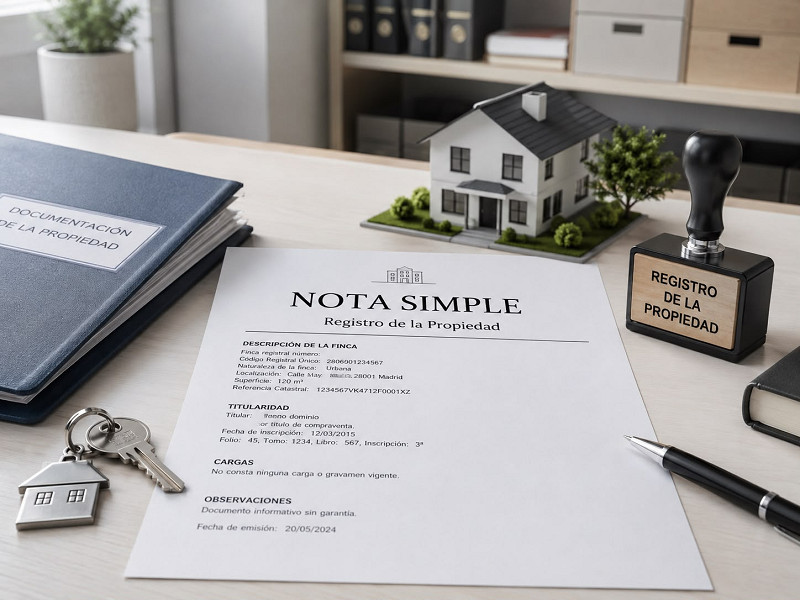
Nota Simple from the Property Registry;
seller’s ownership rights;
mortgage charges;
seizures, restrictions, or easements;
cadastral data;
correspondence of the registered surface area;
renovation permits;
IBI property tax debt;
debts to the owners’ community;
energy certificate;
habitability certificate, where applicable;
minutes of the owners’ community meetings;
possible urban planning restrictions.
In Spain, the notary does not replace the buyer’s personal lawyer. The notary verifies the legality of the notarial act, but does not represent the buyer’s commercial interests and does not carry out full due diligence on behalf of the client.
Step 9. Obtain a Mortgage, If Needed
Non-residents can obtain a mortgage in Spain, but the conditions depend on the bank, nationality, income currency, country of tax residency, down payment, and financial profile of the client.
Usually, the bank evaluates:
income stability;
debt burden;
credit history;
borrower’s age;
source of funds;
the property itself;
valuation by an independent appraiser.
In practice, non-residents often need a higher down payment than residents. For this reason, it is better to discuss the mortgage strategy before starting an active search, so the buyer understands the real purchase budget.
Step 10. Sign the Deed at the Notary
The final stage is signing the escritura pública de compraventa before a notary. On the day of completion, the buyer pays the remaining amount, the parties sign the public deed, the seller hands over the keys, and ownership is then registered in the Property Registry.
After signing, it is necessary to:
pay the tax;
submit documents to the Property Registry;
transfer utilities;
notify the owners’ community;
arrange insurance;
set up payment of IBI and utility bills;
organize renovation, furnishing, or property management, if necessary.
For ITP in Catalonia, the general deadline for filing and payment is one month from the date of the transaction.
Can You Buy an Apartment Remotely?
Yes, the transaction can be completed remotely by power of attorney. This is convenient for buyers who do not live in Spain or cannot be physically present at every stage.
Usually, the buyer grants power of attorney to a lawyer or representative. The power of attorney can be used to obtain an NIE, open a bank account, sign documents, and interact with the bank, notary, and tax authorities.
GG Real Estate Barcelona supports property purchases in Barcelona at every stage, including online and offline viewings, negotiations with the seller, legal due diligence, and remote completion by power of attorney.
Main Mistakes Made by Non-Residents
The most common mistakes are:
starting the search without understanding the full budget including taxes;
not obtaining an NIE in advance;
signing a deposit agreement without legal checks;
relying only on information from the seller;
not checking property debts;
ignoring community fees;
buying an apartment with illegal renovations;
counting on a mortgage without prior approval;
not checking the liquidity of the area;
not planning future property management.
Most problems can be avoided if the process is structured correctly from the beginning.
Conclusion
Buying an apartment in Spain as a non-resident in 2026 is absolutely possible. Spain remains an open market for foreign buyers, and the procedure itself is clear and safe if the correct order is followed: define the goal, calculate the budget, obtain an NIE, prepare the bank, choose the property, carry out legal due diligence, and complete the transaction correctly at the notary.
The most important thing is not to rush into signing documents before checking the property and not to evaluate the purchase only by price. A good apartment in Spain is not just square meters, but a legally clean, liquid, and well-chosen asset.
GG Real Estate Barcelona helps non-residents buy property in Spain on a turnkey basis: from apartment search and document checks to mortgage, taxes, notary signing, property registration, and future property management.
FAQ
Can a non-resident buy an apartment in Spain?
Yes. Non-residents can buy real estate in Spain. For the transaction, they will need an NIE, bank documents, and legal support.
Do I need a residence permit to buy property?
No. Buying property does not require a residence permit. However, the purchase itself may be part of a broader relocation or investment strategy.
How much should I budget for additional costs?
Depending on the region and type of property, buyers usually need to budget for taxes, notary fees, registration, legal fees, and bank expenses. In Catalonia, the tax burden depends on whether the property is resale or new-build.
Can I buy an apartment in Spain by power of attorney?
Yes. The buyer can grant power of attorney to a representative who will act on their behalf at certain stages or throughout the entire transaction.
Do I need a lawyer when buying an apartment?
Yes, especially for non-residents. A lawyer checks the property, documents, debts, encumbrances, deposit agreement, and protects the buyer’s interests before completion.