Author: Ruslan Gavrilov
CEO of GG Real Estate Barcelona
A practical guide for owners of apartments, houses, and villas in Barcelona, Catalonia, and other regions of Spain
Selling property in Spain isn't just posting a listing on a portal and waiting for a buyer. It's a serious professional process — one that involves valuation, strategy, documentation, marketing, lead handling, showings, negotiation, and legal closing.
As CEO of GG Real Estate Barcelona, I see the same situation again and again: owners come to us wanting to sell their property above market price. That's understandable and natural. Every owner wants to get the most for their asset.
But a professional's job isn't to validate inflated expectations. It's to honestly explain how the market actually works.
This matters especially in Barcelona and along the Catalan coast, where the market is active but highly price-sensitive. Buyers compare dozens of properties, watch new listings closely, react quickly to good options, and just as quickly ignore anything overpriced.
A professional sale doesn't begin with the phrase "I want to sell for more." It begins with a real valuation of the property. Only after that can we talk about strategy, price, timing, and marketing.
If a property is priced correctly, presented well, and placed on the right portals, the first inquiries should arrive quickly. If there's no real interest in the first few days, the problem is almost never the market. It's the price, the presentation, or the condition of the property.
Why inflated expectations hurt the sale
Almost every owner believes their property is special. That's understandable — real estate is often tied to personal history, memories, renovation investments, furniture, design, and emotion.
But the buyer sees it differently. They compare the property to the market.
The buyer asks simple questions:
- What else can I get for this money?
- Are there similar apartments for less?
- How much is a square meter in this neighborhood?
- Does it need renovation?
- Is there an elevator, parking, terrace, view?
- How liquid is the street?
- What will the running costs be after purchase?
- Is there room to negotiate?
That's why the price the seller wants and the price the market is willing to accept are often two very different things.
A professional agency shouldn't promise the impossible. Its job is to explain the real situation, show the data, set the right starting price, and build a sales strategy.
Step one — a professional property valuation
Before taking a property to market, you have to value it.
Property valuation in Spain can be done in several ways. There are online tools that offer a market reference — banking valuation services, market reports, comparative listing analysis, and recent transaction data.
There are also official appraisal companies, used for example in mortgage lending. These appraisers determine the property's value for the bank when the buyer is applying for a mortgage.
But for selling a property, a bank valuation alone is not enough.
Market price doesn't depend only on square meters, cadastre, or technical report. You also have to factor in:
- the real supply in the neighborhood;
- the prices of competing properties;
- the liquidity of the street;
- the floor;
- the condition of the building;
- whether there's an elevator;
- a terrace or balcony;
- the view;
- noise;
- the layout;
- the quality of the renovation;
- the documentation;
- community fees;
- demand for that specific type of property;
- buyer behavior in the first days after publication.
It's the combination of these factors that defines not the desired price, but the real market price.
Why you shouldn't list "with a margin"
Many sellers say: "Let's price it higher and lower it later."
At first glance, that seems logical. In practice, this strategy often hurts the sale.
In Spain, buyers watch new listings very closely. Especially on Idealista, the country's main real estate portal. If an apartment or house comes out at an inflated price, the market shows it immediately.
The property gets viewed, sometimes saved to favorites, but no one requests a showing. After a few weeks, the listing starts to look stale.
Buyers start to think:
"Why hasn't it sold yet?" "There must be something wrong with it." "There'll be a lot of room to negotiate." "Let's wait until they drop the price."
In the end, an inflated starting price doesn't help you sell for more. It usually does the opposite: the property loses its freshness, becomes less appealing, and ultimately sells slower and for less than it would have at the right price from day one.
Idealista — the main demand indicator in Spain
For selling property in Spain, the key portal is Idealista. It's the main reference point for buyers, owners, agencies, and investors.
In Barcelona and Catalonia especially, the first reaction on Idealista is an important market signal.
If a property is priced correctly, with professional photography, an accurate description, and clear specs, inquiries should arrive in the first week. In active market segments, the first messages can come in on day one or two.
If there's no noticeable interest in the first 24–48 hours, that's a warning sign.
If a liquid property in Barcelona or a strong Catalan location doesn't generate at least 10–15 quality inquiries in the first few days, you need to analyze why.
The cause usually comes down to one of three factors:
- the price is above market;
- the property is poorly presented;
- the property has real shortcomings that aren't reflected in the price.
What happens after the listing goes live
Publishing the listing isn't the finish line. It's the start of testing the market.
Once the listing is out, a professional agency tracks:
- the number of views;
- the number of favorites;
- the number of inquiries;
- the quality of those inquiries;
- buyer questions;
- the number of scheduled showings;
- post-showing feedback;
- the behavior of competing properties;
- the price dynamics in the neighborhood.
If the market is interested in the property, you see it right away. Buyers ask questions, request documents, schedule showings, discuss terms, and come back with follow-up interest.
If inquiries are scarce, showings aren't scheduled, or buyers don't come back after viewing, it's time to adjust the strategy.
The first-10-showings rule
There's a simple professional indicator: if after 10 quality showings the property hasn't generated a serious offer, something is off.
Sometimes the issue is the price. Sometimes it's the condition. Sometimes it's poor positioning.
For example: an apartment that needs renovation is being marketed as move-in ready. Or a house with documentation issues is priced like a flawless property. Or the owner wants a price the market, demand, and buyer reactions don't support.
After 10 showings, you have to honestly analyze the feedback:
- Do buyers think the property is expensive?
- Are they comparing it to better-priced options?
- Are they pointing out the condition?
- Do they have doubts about the neighborhood?
- Are they confused by the layout?
- Are they factoring in renovation costs?
- Are they unwilling to pay for furniture or design?
- Are there legal questions?
When every buyer says the same thing, the market has already given its answer. And that answer can't be ignored.
Why a professional agency shouldn't take just any property
Selling property requires resources.
When an agency takes on a property, it invests money, time, and team capacity. It's not just "putting up a listing."
A proper launch of a property includes:
- market valuation;
- competitor analysis;
- a sales strategy;
- gathering documentation;
- verifying legal status;
- checking for debts and encumbrances;
- professional photography;
- video or virtual tour where needed;
- multilingual property descriptions;
- publication on portals;
- listing promotion;
- inquiry management;
- buyer qualification;
- organizing showings;
- negotiation;
- transaction support.
Even in the early phase, the agency takes on real costs. Preparation, basic due diligence, marketing, management, publication, and promotion can cost the company between €1,000 and €1,500 before the property is sold.
That's why a professional agency can't take on a property when the price is unrealistic from the start and the owner isn't willing to listen to the market.
In that scenario, the agency wastes resources, the agents waste time, and the seller wastes months with no result.
At GG Real Estate Barcelona, we only take on a property when the price matches market reality — or when the owner is ready to follow a professional strategy.
What documents you need to sell property in Spain
Before launching the sale, the paperwork has to be ready.
Typically, this includes:
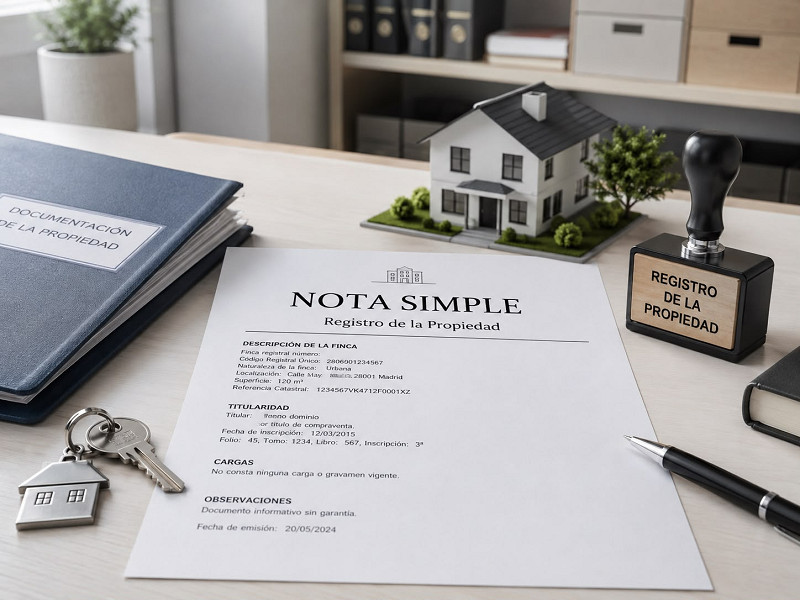
- Nota Simple from the Property Registry;
- proof of ownership;
- the owner's passport or NIE;
- the latest IBI payment;
- a certificate confirming no debts with the homeowners' association;
- the energy certificate;
- cédula de habitabilidad, where applicable;
- mortgage documents, if the property is encumbered;
- floor plans, renovation permits, or paperwork for any structural changes;
- information on utility bills;
- details on the homeowners' association.
For the buyer, having documents ready is a sign of transparency. The faster the seller can provide information, the higher the trust — and the faster the transaction moves.
What a proper property presentation looks like
Even a great property can be undermined by a poor presentation.
The buyer makes their first decision based on the photos. If the photos are dark, fail to show the space, distort the layout, or miss the property's strong points, a portion of buyers won't even open the listing.
A proper presentation includes:
- professional photography;
- preparing the property before the shoot;
- cleaning and visually ordering the space;
- a logical sequence of photos;
- an honest description;
- emphasis on the strong points;
- inclusion of the relevant specs;
- multilingual copy;
- a clear call to action;
- the ability to respond to inquiries quickly.
For premium properties, you also need to use video, drone footage, virtual tours, presentations for private clients, and closed mailings to a curated buyer database.
What price to list at
The right price isn't the highest price you'd like to get. It's the price that attracts market interest and leaves room for negotiation — without scaring buyers off.
A good starting price should account for:
- the valuation results;
- real comparables;
- competition on Idealista;
- the speed of sales in the neighborhood;
- the condition of the property;
- the seller's urgency;
- the property's uniqueness;
- willingness to negotiate;
- tax and legal specifics;
- the target buyer profile.
When the price is set correctly, the property captures attention in the first days. That creates competition between buyers and increases the chances of selling on the best terms.
When the price is set wrong, the property loses its first weeks — the single most important period after going to market.
How long it takes to sell property in Spain
The timeline depends on price, neighborhood, property condition, and the quality of the marketing.
If the apartment or house is priced correctly, the documentation is ready, the property is professionally presented, and it's placed on the key portals, the realistic sales timeline is one to three months.
This is especially true for liquid properties in Barcelona, Gavà Mar, Castelldefels, Sitges, Sant Cugat, and other in-demand locations across Catalonia.
That doesn't mean every property sells in 30 days. But if it's a liquid property at a market-aligned price, the process should move actively: inquiries, showings, negotiations, offer, deposit, and closing.
If a property has been on the market for six months without results, the strategy almost always needs to be reviewed.
What GG Real Estate Barcelona does when selling a property
At GG Real Estate Barcelona, we approach property sales as a professional project.
We don't start with promises to sell "above market." We start with analysis.
Our job is to determine the property's real value, prepare it for sale, present it properly to the market, attract qualified buyers, and take the transaction through to the notary.
The work includes:
- a professional property valuation;
- competitor analysis;
- pricing recommendations;
- documentation preparation;
- preliminary legal due diligence;
- photography and presentation;
- publication on the key portals;
- engagement with local and international buyers;
- multilingual support;
- organizing showings;
- negotiation;
- transaction preparation;
- accompaniment at the notary.
We only take on a property when the price reflects market reality, or when the owner is willing to follow a professional strategy. That matters for the seller — and it matters for the agency.
Why an honest valuation works in the seller's favor
An honest valuation isn't an attempt to underprice. It's the way to sell faster — and better.
When a property goes to market at a realistic price, it gets more inquiries. More inquiries lead to more showings. More showings create competition. Competition strengthens the seller's negotiating position.
An inflated price has the opposite effect: few inquiries, few showings, weak feedback, lost time, and eventually a price reduction anyway.
A professional seller has to understand: the market is under no obligation to agree with the owner's expectations. The market reacts only to the relationship between price, quality, location, and documentation.
The bottom line
Property in Spain can be sold quickly and well — if you approach it professionally from day one.
The first step is an objective valuation. The second is the right price. The third is quality preparation of the property. The fourth is smart placement and promotion. The fifth is reading the market's reaction and being ready to adjust the strategy.
If there are no inquiries in the first days, if there's no serious interest after 10 showings, if buyers keep raising the price as the issue — that's a signal. And it can't be ignored.
Selling property isn't about waiting for a miracle. It's a managed process.
That's exactly why GG Real Estate Barcelona only works with properties where the owner is ready for a professional approach, a real valuation, and an honest sales strategy.
Reach out to GG Real Estate Barcelona. Our team will deliver a professional valuation, prepare the property for sale, design the promotion strategy, place it on the right portals, and guide the transaction through to the notary.
Submit an inquiry to get an initial consultation on selling your property in Spain.
FAQ
How do I know what my property in Spain is really worth?
You need to compare your property to current comparables, check prices in the neighborhood, factor in the condition, documentation, floor, view, elevator, terrace, parking, and the way buyers react after publication. Online tools give a reference point, but the final price should be set by a market specialist.
Why can't I just list at a higher price and lower it later?
Because the first days after publication are the most important. If a property comes out at an inflated price, the response is weak, the listing loses its freshness, and buyers start seeing it as a property that's been "sitting" on the market.
Where should I publish my property in Spain?
The main portal for the Spanish market is Idealista. Fotocasa, Habitaclia, Yaencontre, international portals, and closed buyer databases can also be used, depending on the property type and target audience.
How many inquiries should come in after publication?
For a liquid property at the right price, the first inquiries should arrive within days. If there's no noticeable interest in the first 24–48 hours, you need to review the price, the presentation, and the competition.
What does it mean if there's no offer after 10 showings?
It's a signal that the property isn't matching buyer expectations. The cause is usually the price, the condition, the documentation, the location, or poor positioning.
How long does it take to sell property in Spain?
With the right price, the documents ready, and professional marketing, a liquid property can sell within one to three months. Longer timelines usually call for a strategy review.
Can an agency refuse to take on a property?
Yes. A professional agency can decline a property if the price is significantly inflated and the owner isn't willing to consider the market valuation. Selling takes resources, and working with an unrealistic price rarely produces results — for the seller or the agency.