A Step-by-Step Guide for Foreign Buyers
Buying property in Spain is open to foreign citizens regardless of whether they hold a Spanish residence permit. Non-residents can purchase apartments, houses, villas, land and commercial property under almost the same conditions as Spanish citizens.
However, the transaction requires proper preparation. The buyer must define the budget, choose the right region and property, obtain an NIE foreigner identification number, confirm the source of funds, complete legal due diligence and formalise the transfer of ownership before a notary.
Below are the main stages involved in buying property in Spain and the issues that require particular attention.
Can a Foreigner Buy Property in Spain?
Spanish law does not establish general restrictions on foreign citizens purchasing property. The buyer may be a Spanish resident or non-resident, an individual or a company.
A foreign buyer needs an NIE, the identification number assigned to foreigners in Spain. It is required to sign notarial documents, pay taxes, register ownership and interact with Spanish public authorities.
Purchasing property does not automatically grant the right to live in Spain. Buyers planning to relocate must apply separately for an appropriate residence permit.
How to Set a Purchase Budget
Before starting the property search, the buyer must consider both the purchase price and the additional transaction costs.
The buyer normally pays taxes, notary fees, Land Registry fees, legal fees and, when financing is required, the cost of a bank valuation. Additional expenditure may include renovation, furniture, insurance and utility connections.
As a general guideline, buyers should allow an additional 10–15% of the purchase price. The final amount depends on the autonomous community, the type of property and the structure of the transaction.
Buyers requiring a mortgage should also calculate the amount of personal capital available. Spanish banks tend to finance non-residents more conservatively than residents, so a substantial down payment may be required.
Choosing the Region and Property
The Spanish property market varies considerably between regions.
Barcelona and Madrid suit buyers who prioritise liquidity, business infrastructure and international demand. The Costa Brava and the coastline of Barcelona province are popular with families seeking access to the sea, privacy and proximity to a major city.
The Costa Blanca attracts buyers with more accessible prices, a mild climate and a large selection of new developments. Marbella, Benahavís and Estepona are focused on premium property, gated residential communities, villas, golf and an affluent international clientele.
When selecting a property, buyers should assess not only the location and individual features but also its future liquidity, maintenance costs, transport connections, the condition of the building and rental potential.
Obtaining an NIE and Preparing Documents
It is advisable to obtain the NIE before signing the final purchase deed. An application can be submitted in Spain, through a Spanish consulate or by an authorised representative acting under a notarised power of attorney.
Opening a Spanish bank account is also recommended. It can be used to pay taxes, utility bills, insurance, community fees and other ongoing property expenses.
Particular attention must be paid to proof of the source of funds. A bank or notary may request tax returns, bank statements, proof of income, documents relating to the sale of other assets, dividends, inheritance or company activities.
These documents should be prepared in advance, especially when the funds are being transferred from another country.
Legal Due Diligence on the Property
A full legal review should be completed before a substantial deposit is paid.
The review confirms whether the seller is the registered owner and whether the property is affected by a mortgage, seizure, outstanding debt or another encumbrance. The information recorded in the Land Registry and Cadastre is also compared with the actual condition of the property.
The review should establish:
- whether the existing layout is legal;
- whether there are any unregistered extensions;
- whether community fees are outstanding;
- whether the municipal property tax, IBI, has been paid;
- whether major works are planned in the building;
- whether there are any planning violations;
- whether the property is occupied by tenants or other users;
- whether the intended rental model is permitted.
When buying a villa or land, the boundaries, building permits, swimming pool, auxiliary structures and classification of the land must also be examined.
For a new-build property, the buyer should verify the developer, ownership of the land, the building licence, technical documentation, delivery conditions and guarantees covering advance payments.
Reservation and Deposit Agreement
Once a property has been selected, the parties may sign a reservation agreement. The buyer pays an agreed amount and the property is temporarily removed from the market.
The agreement should specify the purchase price, reservation period, conditions for refunding the payment and the documents that the seller must provide.
After legal due diligence has been completed, the parties normally sign a contrato de arras, a private deposit agreement. It establishes the final price, deadline for completion before the notary, payment method and liability of both parties.
A buyer who withdraws without a contractual justification may lose the deposit. If the seller withdraws, they are normally required to return twice the amount received. The exact consequences depend on the type and wording of the agreement.
When the purchase depends on mortgage approval, a positive legal review or the sale of another property, the relevant condition must be expressly included in the agreement.
Completion Before a Notary
The final transaction takes place before a notary. The buyer and seller sign the public deed of sale, known as the escritura pública de compraventa.
Before signing, the identities and authority of the parties, the property description, its Land Registry status, outstanding debts and payment arrangements are checked.
The remaining purchase price is paid to the seller using the agreed method. The buyer usually receives the keys after signing unless the contract establishes a different handover date.
When the seller has an existing mortgage, its repayment and removal from the Land Registry must be properly organised.
The buyer may attend in person or complete the transaction through an authorised representative acting under a notarised power of attorney.
Taxes and Additional Costs
Taxation depends on whether the buyer is acquiring a new-build or resale property.
When purchasing a new residential property directly from a developer, the buyer generally pays VAT, known in Spain as IVA, at a rate of 10%. Stamp duty, AJD, also applies, and its rate varies between autonomous communities.
When purchasing a resale property, the buyer pays transfer tax, known as ITP. The applicable rate is determined by regional legislation and may depend on the property value and the buyer’s circumstances.
In addition to taxes, buyers should budget for notary fees, Land Registry fees, legal representation and banking expenses.
All costs should be calculated before the deposit agreement is signed so that the buyer clearly understands the full transaction budget.
Registration of Ownership
After the notarial deed has been signed and the taxes paid, the documentation is submitted to the Land Registry.
Registration confirms the rights of the new owner and provides legal protection against potential claims and unregistered transactions.
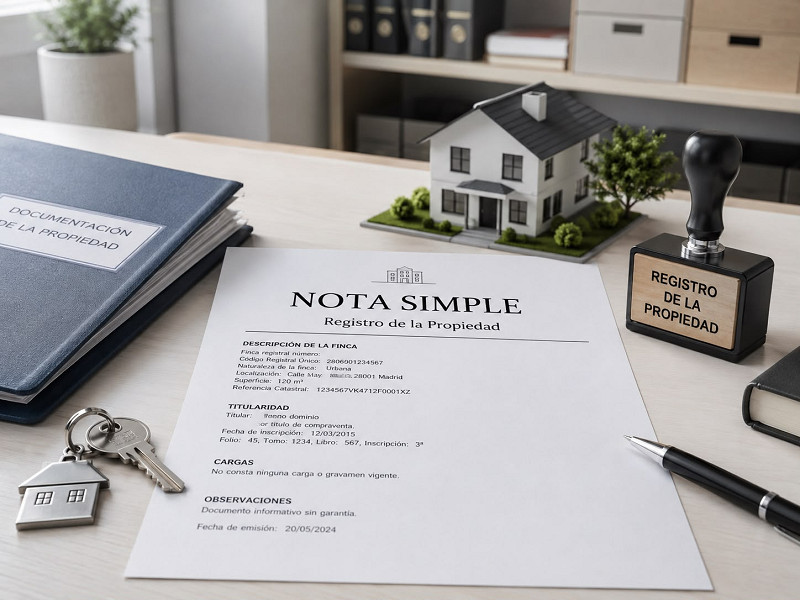
Once the procedure has been completed, it is advisable to obtain a new Land Registry extract and confirm that the property is registered in the buyer’s name and that any previous encumbrances have been removed.
Utility contracts, insurance, bank payments, IBI property tax and community fees should then be transferred into the new owner’s name.
Can Property Be Purchased Remotely?
Property in Spain can be purchased without the buyer being permanently present in the country.
A notarised power of attorney can be granted to a lawyer or another authorised representative. Within the powers granted, the representative can obtain the NIE, sign agreements, arrange payments, attend the notarial completion, pay taxes and register ownership.
Remote purchasing is especially convenient for international buyers, although banking documents and proof of the source of funds must be prepared in advance.
Common Mistakes Made by Buyers
One of the most serious mistakes is paying a substantial deposit before legal due diligence has been completed.
Buyers also sometimes fail to include taxes and additional costs in the budget, overlook the condition of the building, sign the seller’s agreement without legal review or assume that tourist rentals are permitted without verifying their legal status.
It is important to assess not only the current appeal of a property but also its future costs, target rental audience and resale potential.
Conclusion
Buying property in Spain involves several consecutive stages: defining the budget, choosing a property, obtaining an NIE, preparing banking documents, completing legal due diligence, signing the deposit agreement, formalising the transaction before a notary and registering ownership.
A safe transaction begins with checking the property and the seller’s documentation before a substantial amount is transferred. The buyer must also calculate taxes and expenses in advance and confirm that the property is suitable for the intended purpose, whether personal residence, investment, rental income or capital preservation.
GG Real Estate Barcelona represents buyers and provides comprehensive property acquisition services in Barcelona, Catalonia, the Costa Brava, the Costa Blanca, the Costa del Sol, Madrid, the Balearic Islands and other regions of Spain. We assist with property selection, negotiations, legal due diligence, document preparation, notarial completion and registration of ownership in the buyer’s name.
Frequently Asked Questions
Can a non-resident buy property in Spain?
Yes. Foreign citizens can purchase residential and commercial property without holding a Spanish residence permit.
Is an NIE required to buy property?
Yes. The NIE is required for the notarial transaction, payment of taxes and registration of ownership.
What taxes does the buyer pay?
The purchase of a new-build property is generally subject to IVA and AJD. A resale property is subject to ITP. The applicable rates depend on the autonomous community.
Can a foreign buyer obtain a mortgage?
Yes. Spanish banks provide mortgages to international buyers, although the financing percentage and requirements depend on income, residence status and the characteristics of the property.
Can the purchase be completed without travelling to Spain?
Yes. The transaction can be completed remotely through an authorised representative acting under a notarised power of attorney.