The Main Risks When Buying Property and How to Protect Your Interests
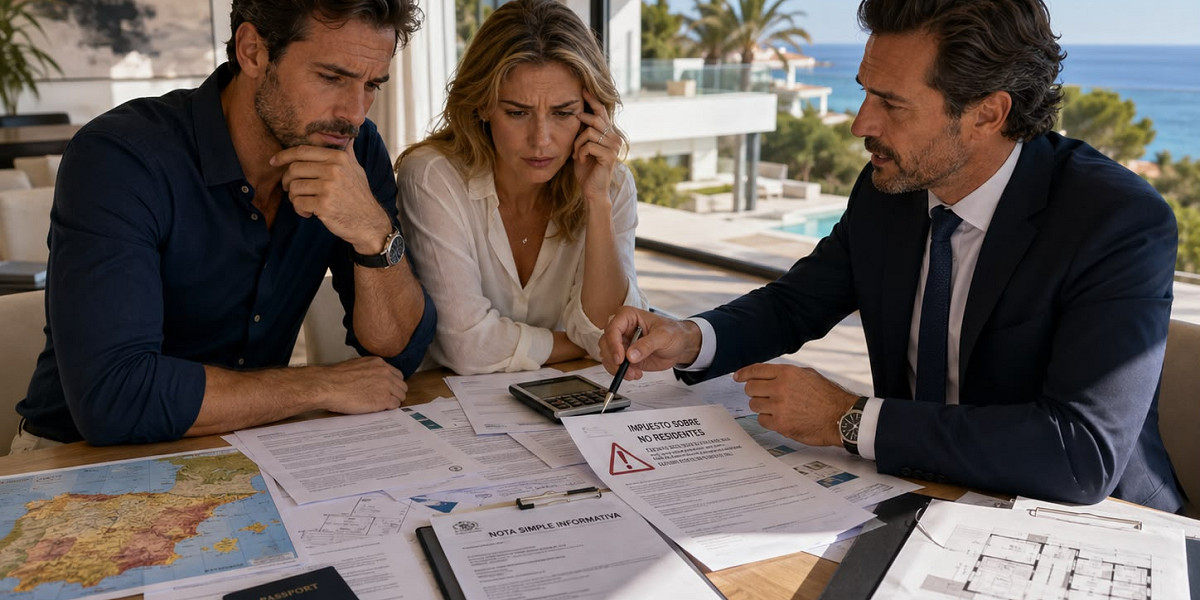
Buying property in Spain as a foreigner can be a safe and straightforward process when the documents are prepared in advance, the full budget is calculated correctly and the property undergoes independent legal due diligence. Most serious problems arise not at the notary’s office but much earlier, during the property search, reservation payment and signing of the preliminary agreement.
Foreign buyers often rely on marketing materials, verbal promises made by the seller or their experience of buying property in another country. However, Spain has its own rules governing contracts, taxation, property registration and banking compliance.
Below are the main mistakes that can lead to financial losses, transaction delays or the purchase of a property with legal and technical problems.
Paying Money Before Legal Due Diligence
One of the most dangerous mistakes is paying a reservation fee or substantial deposit before checking the property and the seller’s documentation.
The buyer should establish:
- who the registered owner is;
- whether the property is subject to a mortgage, seizure or other encumbrance;
- whether community fees are outstanding;
- whether the municipal property tax, IBI, has been paid;
- whether the actual area corresponds to the documentation;
- whether alterations and extensions are legal;
- whether tenants or other occupants are present;
- whether the intended use of the property is permitted.
The conditions for refunding the reservation payment must be recorded in writing. A clause providing for the refund of the money if legal due diligence reveals serious problems protects the buyer from unnecessary financial loss.
Choosing a Property Based Only on Photographs
Professional photographs may conceal defects in the property and its surroundings. Wide-angle photography can make rooms appear larger, while attractive views may not reflect the real situation from lower floors or at different times of day.
Before buying, it is important to assess:
- natural light;
- noise levels;
- the condition of the entrance and façade;
- the view from each room;
- proximity to roads or railway lines;
- neighbouring development;
- humidity and ventilation;
- the condition of utility systems.
For a remote purchase, buyers should request a detailed video viewing, technical inspection and current floor plans. For high-value property, a virtual viewing alone is generally insufficient.
Incorrect Budget Calculation
Some buyers focus only on the price shown in the listing. However, the purchase price is accompanied by taxes, notary and Land Registry fees, legal costs, bank charges and other expenses.
The purchase of a resale property is subject to the regional transfer tax, ITP. The purchase of a new residential property from a developer is generally subject to IVA at 10% and AJD.
Additional costs may include:
- a bank valuation for mortgage purposes;
- translation and legalisation of documents;
- a power of attorney;
- insurance;
- renovation and furniture;
- utility connections;
- a technical inspection;
- relocation and property maintenance.
The full budget should be determined before negotiations begin. This prevents the buyer from selecting a property but then lacking sufficient funds to complete the transaction.
Applying for the NIE Too Late
A foreign buyer needs an NIE, the Spanish identification number for foreigners. It is used for notarial completion, tax payments and registration of ownership.
A common mistake is to begin the NIE application only after selecting a property and signing a preliminary agreement. If the process is delayed, the deadline for notarial completion may be missed.
The NIE application should be started in advance. When personal attendance is not possible, it may be obtained through an authorised representative acting under a notarised power of attorney.
Failing to Prepare Proof of Funds
Spanish banks and notaries must verify the source of the funds used to purchase property.
A buyer may have the necessary capital, but this does not mean the bank will automatically accept the transfer. The following documents may be requested:
- tax returns;
- bank statements;
- proof of income;
- an employment contract;
- documents relating to the sale of assets;
- proof of dividends;
- inheritance or gift documentation;
- information about company activities.
If the documents are prepared too late or do not clearly explain the source of the capital, the bank may delay the transfer. As a result, the buyer may miss contractual deadlines and lose the deposit.
Banking compliance should be started before signing an agreement with a strict completion date.
Signing a Contract in an Unfamiliar Language
A buyer should not sign a document that they understand only through explanations provided by the seller or agent.
Particular attention should be paid to:
- the conditions for refunding the reservation payment;
- the legal nature of the deposit;
- the notarial completion deadline;
- the liability of both parties;
- the presence of a mortgage condition;
- the furniture and other assets included in the price;
- the required condition of the property at handover;
- the procedure for settling debts;
- the consequences of delay or withdrawal.
An oral translation during signing does not always allow the buyer to understand the legal consequences. It is advisable to obtain a written translation or a detailed explanation from an independent professional before signing.
Not Having an Independent Buyer’s Representative
The seller’s agent or the developer’s sales office represents the selling party. Its main objective is to sell the property on the terms agreed with the owner.
Foreign buyers sometimes mistakenly believe that the seller’s representative also protects their interests.
An independent buyer’s representative should:
- compare the property with alternative options;
- assess whether the asking price is justified;
- check the documents;
- identify risks;
- conduct negotiations;
- monitor contracts and payments;
- assist with notarial completion.
Sales representation and legal due diligence should remain separate. The buyer’s lawyer should be independent of the seller and developer.
Misunderstanding the Deposit Agreement
A contrato de arras is not a simple formality but a legally significant agreement.
Buyers often assume that they can withdraw from the purchase and recover the deposit in any situation. In practice, the consequences depend on the type of deposit and the wording of the agreement.
When the contract establishes arras penitenciales, the buyer normally loses the deposit if they withdraw, while the seller must usually return twice the amount received. However, this consequence must be properly stated in the agreement.
If the purchase depends on mortgage approval, the sale of another property, legal due diligence or the delivery of specific documents, these conditions must be included in writing.
Relying on a Mortgage Without Final Bank Approval
An initial conversation with a bank manager or an online mortgage estimate does not constitute final approval.
The bank reaches its decision after examining:
- the buyer’s income and expenses;
- credit history;
- tax residence;
- the source of the down payment;
- the bank valuation;
- the legal condition of the property.
The bank valuation may be lower than the agreed purchase price. In this case, the buyer will need to increase their personal contribution.
A buyer should not sign an unconditional deposit agreement while relying on a mortgage that has not yet been approved. The contract should clearly establish what happens if the bank refuses financing.
Assuming That Property Ownership Grants Residence
Property ownership and the right to reside in Spain are separate legal matters.
A foreign citizen may purchase a house or apartment without holding a residence permit. However, buying property does not automatically grant the right to live or work permanently in Spain.
Before buying, a person intending to relocate should separately identify the appropriate immigration route. This may include digital nomad residence, non-lucrative residence, a work permit, family residence or another legally available option.
Misunderstanding this issue may result in the purchase of a property that the owner cannot use as originally planned.
Buying for Rental Without Checking Restrictions
Rental profitability should not be calculated solely on the basis of the advertised rental rate.
The buyer should check:
- whether tourist rentals are permitted;
- whether a licence is required;
- whether the community of owners allows the intended rental activity;
- whether municipal restrictions apply;
- the level of demand outside the high season;
- the cost of management, cleaning and maintenance;
- the taxes payable by the owner;
- whether long-term rental is possible on the intended terms.
It is particularly risky to purchase a property solely for short-term rental without confirming the existence of a valid licence or the possibility of obtaining one.
Ignoring the Condition of the Building
When buying an apartment, the buyer should inspect not only the individual property but also the entire building.
Even a fully renovated apartment may be located in a building that requires expensive major works.
The buyer should examine:
- the condition of the façade and roof;
- the lift;
- communal utility systems;
- minutes of owners’ meetings;
- approved special assessments;
- planned renovation works;
- community debts;
- the results of the building’s technical inspection.
The cost of major building works can significantly increase the real cost of owning the property.
Failing to Arrange a Technical Inspection
A legally compliant property is not necessarily in good technical condition.
A technical inspection is particularly important when buying:
- a property in an older building;
- a villa;
- a renovated house;
- a property with a swimming pool;
- a home showing signs of damp;
- a property with an altered layout.
A technical specialist may identify cracks, waterproofing problems, roofing defects, foundation issues, electrical faults, plumbing defects and problems with the climate-control system.
The cost of a professional inspection is generally much lower than the potential cost of repairing hidden defects.
Failing to Check the Actual Area
Spanish documents and property listings may use different measurements of area.
It is important to distinguish between:
- usable area;
- constructed area;
- constructed area including communal spaces;
- terrace area;
- plot area.
The buyer should understand which measurement is shown in the advertisement and which area appears in the Land Registry and Cadastre.
Differences in area may affect the property value, mortgage valuation, legality of extensions and future resale.
Assessing a Property Only by Price per Square Metre
Price per square metre is useful for an initial comparison, but it does not reflect all the characteristics of a property.
The value is also affected by:
- the exact location;
- the floor;
- the presence of a lift;
- orientation;
- natural light;
- views;
- the condition of the building;
- a terrace;
- parking;
- renovation quality;
- layout;
- liquidity.
Two properties in the same neighbourhood with the same area may differ significantly in their true market value and future resale potential.
Relying on Unverified Promises from a Developer
When buying a new-build property, buyers often rely on digital images and verbal promises made by the sales office.
The contract and its appendices should clearly state:
- the area and layout;
- the materials;
- kitchen equipment;
- the air-conditioning system;
- the terrace;
- parking and storage;
- communal facilities;
- the delivery deadline;
- the procedure for changes to the project;
- guarantees protecting advance payments.
When a promised feature is not recorded in writing, proving that it was obligatory after completion will be considerably more difficult.
Transferring Money to an Unverified Account
Payment details should be checked against the contract and confirmed with an official representative of the relevant party.
Fraudsters may replace bank details in email correspondence. Before making a large transfer, the buyer should verify the account information through an independent communication channel.
When purchasing a new-build property, the buyer should also confirm that advance payments are being transferred to the correct project account and are protected by the required guarantee.
All payment documents and bank confirmations should be retained.
Ignoring Annual Ownership Costs
After completion, the owner continues to incur regular expenses.
These include:
- municipal property tax, IBI;
- community fees;
- insurance;
- utilities;
- swimming pool and garden maintenance;
- property management;
- repairs;
- non-resident tax obligations;
- rental and accounting costs.
Community fees may be particularly high in developments with security, swimming pools, gardens, sports facilities and other shared infrastructure.
Before buying, the buyer should request information about current annual costs and possible special assessments.
Choosing the Wrong Ownership Structure
Most foreign buyers purchase residential property in their personal name. In some cases, ownership through a Spanish or foreign company may also be considered.
Creating a company solely to purchase one apartment does not always provide tax advantages. It may instead generate additional accounting, reporting and administrative costs.
The ownership structure should be selected before the transaction after comparing taxes on acquisition, annual ownership, rental income, inheritance and future resale.
Failing to Consider Future Resale
Even when the property is intended for personal use, its future liquidity should be considered in advance.
Properties that may be more difficult to sell include those:
- with an inefficient layout;
- without natural light;
- on a high floor without a lift;
- with illegal alterations;
- with excessive community fees;
- in an area with limited demand;
- without parking where it is essential;
- suitable only for a very narrow target audience.
A suitable property should meet not only the buyer’s current wishes but also the expectations of the future market.
How to Avoid the Main Mistakes
A safe purchase begins with the correct sequence of actions.
The buyer should first define the objective and full budget, prepare the NIE and banking documents, then select the property and complete legal and technical due diligence. Only after these checks should a deposit agreement be signed and a substantial amount transferred.
All agreements should be recorded in writing. The buyer should understand the documents, tax consequences and conditions for withdrawing from the transaction.
Mortgage financing, residence status, rental plans and future property management should also be considered in advance.
Conclusion
Most mistakes made by foreign buyers result not from a lack of attractive properties but from insufficient preparation and an incorrect order of actions.
The greatest risks arise when money is transferred before checks are completed, contracts are signed without being fully understood, proof of funds is not prepared, the buyer relies on an unapproved mortgage or taxes and expenses are calculated incorrectly.
GG Real Estate Barcelona represents the buyer’s interests exclusively and assists with property acquisitions in Barcelona, Catalonia, the Costa Brava, the Costa Blanca, the Costa del Sol, Madrid, the Balearic Islands and other regions of Spain. We help buyers check the property, assess the price and liquidity, conduct negotiations, prepare documents and complete the transaction safely.
Frequently Asked Questions
Can a reservation payment be made before legal due diligence?
Only when the agreement clearly states that the payment will be refunded if legal problems are discovered or the due diligence result is unsatisfactory.
Is a technical inspection mandatory?
It is particularly recommended when purchasing a villa, a property in an older building, a renovated home or a property showing signs of construction defects.
What happens if the bank refuses the mortgage after the deposit has been paid?
When the agreement does not contain a mortgage condition, the buyer may lose the amount paid.
Does buying property grant the right to live in Spain?
No. Property ownership does not replace a residence permit. A separate immigration basis is required to relocate to Spain.
Can the seller’s agent be fully relied upon?
The seller’s agent represents the owner. Independent legal and professional representation is recommended to protect the buyer.